A technical SEO checklist for UAE websites comes down to three jobs: let search engines crawl your pages, organize your site so every key page is easy to reach, and make sure only your best pages get indexed. Start with your robots.txt file, XML sitemap, URL structure and internal links, then fix any errors that block or confuse crawlers. Do this in the right order and your content has a real chance to show up in search results and in AI-generated answers.
Here is the part most business owners miss. You can publish great pages and still get no traffic if a search engine cannot reach them, or reaches them and gets lost. This guide walks you through the checks that matter most, in plain language, so you can spot problems yourself or brief your developer with confidence.
Why Technical SEO Matters More for UAE Websites
Businesses in the Emirates face a few extra layers that many global guides skip. Many sites run in both English and Arabic. Many serve several emirates, each with its own service pages. Competition in sectors like real estate, healthcare, finance and e-commerce is intense, so small technical gaps can quietly push you behind rivals.
That is why Technical SEO UAE projects often start with structure and crawling, not with new content. If the foundation is shaky, every blog post, ad click and social share has less to build on.
Think of it like a shop in a busy mall. Great products do not help if the entrance is blocked or the signs point the wrong way.
Part One: Crawlability Checklist
Website crawlability is how easily search engine bots can find, open and read your pages. If bots cannot crawl a page, they cannot index it. If they cannot index it, nobody finds it through search.
1. Check Your Robots.txt Configuration
The robots.txt configuration of your site tells bots which areas they may visit. One wrong line can hide your whole website. This happens more often than you would expect, especially after a redesign when a staging rule is left behind.
What to check:
- Open yourdomain/robots.txt and read it line by line.
- Make sure no rule says “Disallow: /” on a live site.
- Allow access to the CSS, JavaScript and image files that your pages need to display properly.
- Block only low-value areas such as cart steps, internal search results and admin folders.
- Add the sitemap location at the bottom of the file.
A quick tip: robots.txt stops crawling, but it does not always stop indexing. If a page must stay out of search, use a no index tag instead and let bots read the page to see it.
2. Clean Up Your XML Sitemap
Think of XML sitemap optimization as handing search engines a tidy list of the pages you want found. A messy sitemap does the opposite and wastes their time.
Keep your sitemap healthy with these rules:
- Include only pages that return a 200 status and can be indexed.
- Remove redirected, deleted, no index and duplicate URLs.
- Split large sitemaps by type, such as pages, blog posts and products.
- Update it automatically whenever you publish or remove content.
- Submit it in your search console account and watch the coverage report.
If your sitemap lists pages that your robots.txt blocks, you are sending mixed signals. Fix one or the other.
3. Fix Status Codes and Redirects
Every URL gives a response code, and bots notice them all. Broken pages (404) and server errors (5xx) waste crawl time and frustrate visitors. Long redirect chains slow things down further.
Look for:
- Internal links that point to 404 pages.
- Redirect chains, where page A goes to B, then to C. Send A straight to C.
- Temporary redirects that should be permanent.
- Pages that load slowly or time out during busy hours.
4. Make Sure Bots Can Render Your Pages
Some modern sites load content with JavaScript. If your key text, links or product details only appear after scripts run, some bots may miss them. Use a URL inspection tool to see the page the way a bot sees it. If the main content is missing, ask your developer about server-side rendering or loading important content in the HTML.
How to Improve Website Crawlability in the UAE
The steps above fix the basics. To go further, think about how bots spend their time on your site. Search engines give each site a limited amount of attention, often called crawl budget. Large UAE sites with many service, location and product pages feel this limit the most.
Here is how to help bots focus on what matters:
- Cut waste: Block endless filter and parameter URLs that create thousands of near-identical pages.
- Speed up the server: Faster responses let bots read more pages per visit.
- Show priority: Link to your best pages from the homepage and main menu.
- Check log files: Server logs show which pages bots actually visit and which they skip.
- Watch mobile: Most searches in the region happen on phones, so your mobile pages must carry the same content and links as desktop.
Small sites rarely hit crawl limits. Even so, these habits keep a growing site healthy.
How to Fix Crawling and Indexing Issues on a Website
Crawling and indexing are two different steps. A page can be crawled but not indexed. When you see the status “Discovered, not indexed” or “Crawled, not indexed” in your search console, work through this order:
- Confirm the page is allowed. Check robots.txt and meta tags for accidental blocks.
- Check the canonical tag. If it points to another page, the search engine may skip this one.
- Review the content. Thin, copied or very similar pages are often left out. Add useful, original detail.
- Add internal links. A page with no links pointing to it signals low importance.
- Include it in the sitemap. Then request indexing through the inspection tool.
- Wait and recheck. New pages can take days or weeks. Do not resubmit daily.
This simple routine solves most website indexing optimization problems without any special software.
Part Two: Site Architecture Checklist
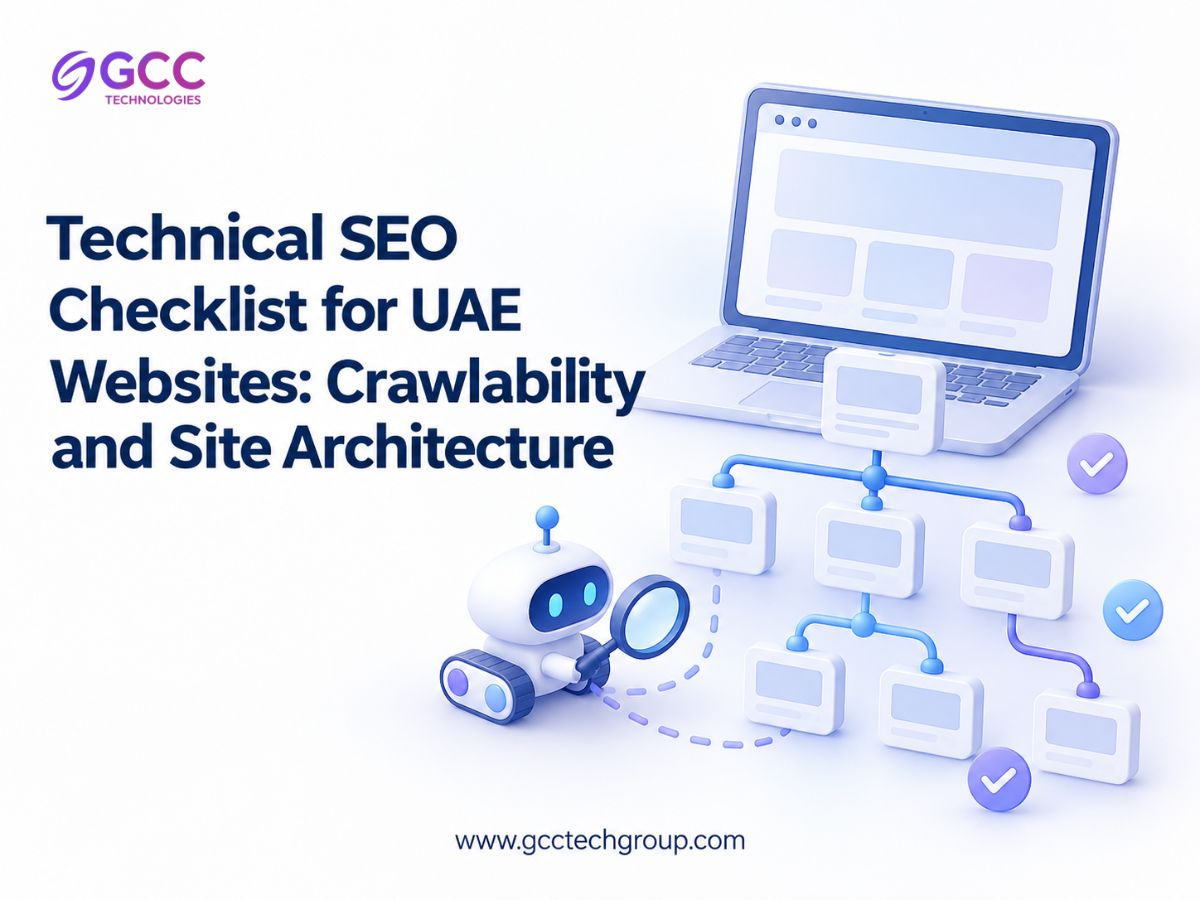
Website architecture SEO is about how your pages are organized and connected. Good structure helps visitors find answers fast and helps search engines understand which pages matter most.
How to Optimize Site Architecture for SEO
A clean structure follows a simple pyramid: homepage on top, main categories below, then sub-pages and detailed content at the bottom. Here is how to build it.
1. Keep the Structure Flat and Logical
Aim for every important page to be within three clicks of the homepage. Group related pages under clear categories. For example, a Dubai clinic might have Services, then Dental, then Teeth Whitening. A visitor and a bot can both guess where things live.
2. Create a Clean Website URL Structure
Your website URL structure should be easy to read, even for someone who has never seen the page. Good URLs are short, use lowercase letters, separate words with hyphens and reflect the page hierarchy.
Do:
- Use words that describe the page, such as /services/technical-seo.
- Keep one version of each URL, with or without a trailing slash, never both.
- Use a consistent pattern for Arabic pages, such as a language folder.
- Avoid session IDs, random numbers and long strings of parameters.
Don’t:
- Change URLs without a redirect plan.
- Stuff several keywords into one address.
- Mix uppercase and lowercase versions of the same path.
3. Build a Smart Internal Linking Structure
Your internal linking structure is how you pass attention from strong pages to important ones. It also shows search engines how topics connect.
Simple rules that work:
- Link from high-traffic pages to pages that need a boost.
- Use descriptive anchor text, not “click here.”
- Add contextual links inside your content, where they feel natural.
- Connect blog posts to the related service page, and the service page back to helpful posts.
- Find and fix orphan pages with a site crawler.
For example, if you are exploring how AI answer engines pick brands to recommend, you will notice that clear structure and consistent signals help there too. Good architecture supports both classic search and AI-driven discovery.
4. Use Breadcrumbs and Clear Navigation
Breadcrumbs show visitors where they are, such as Home, Services, Technical SEO. They also add helpful internal links on every page. Keep your main menu short and focused on top categories rather than listing every page.
5. Handle Duplicate Content and Pagination
UAE sites often have similar pages for different emirates or product variations. That is fine when each page offers unique value. When pages are almost identical, use canonical tags to point to the main version, or merge them. For paginated lists, make sure each page can be reached through normal links and has its own clear title.
6. Set Up Language Versions Correctly
If you serve English and Arabic readers, use hreflang tags so each version reaches the right audience. Each language page should link to its twin, and both should point back to each other. Mistakes here can cause the wrong version to show up or cause duplicate content confusion.
Crawl Control Tools Compared
Many people mix up the tools that control crawling and indexing. This table shows what each one does and when to use it.
| Tool | What It Controls | Best Used For | Common Mistake |
| Robots.txt | Whether bots can crawl a page or folder | Blocking admin areas, cart steps, internal search | Blocking pages you want indexed |
| XML sitemap | Which pages you suggest for discovery | Helping bots find new and important pages | Listing redirected or noindex pages |
| Noindex tag | Whether a crawled page appears in search | Thank-you pages, thin or private pages | Blocking the page in robots.txt so bots never see the tag |
| Canonical tag | Which version of similar pages is preferred | Duplicate or near-duplicate pages | Pointing to the wrong or a broken URL |
| Internal links | How importance flows between pages | Boosting key service and product pages | Leaving valuable pages with no links |
Use them together, not as replacements for each other.
Technical SEO Best Practices for Businesses in the UAE
Once the checklist is done, these habits keep your site in good shape:
- Audit every quarter. Websites change, plugins update and small errors creep in.
- Check after every redesign or migration. This is when most serious crawl problems appear.
- Test mobile speed. Fast pages help both visitors and bots.
- Use HTTPS everywhere. Mixed secure and insecure pages cause confusion.
- Add structured data. Schema markup helps search engines and answer engines understand your business, services and FAQs.
- Show real expertise. Add author names, business details and proof of experience to support trust signals.
- Document changes. Keep a log so you can trace any ranking drop back to its cause.
These steps are not glamorous, yet they quietly protect your visibility month after month.
Common Mistakes That Hurt Crawlability
Before you start fixing things, watch for these frequent slip-ups:
- Leaving a “discourage search engines” setting switched on after launch.
- Blocking CSS and JavaScript files, which stops bots from seeing the page properly.
- Building huge menus with hundreds of links.
- Letting filters create endless URL combinations.
- Forgetting to update the sitemap after content changes.
- Using the same title and description across many pages.
Most of these take minutes to fix once you know where to look.
When to Bring in a Specialist
Some checks are easy to run yourself. Others, like log file analysis, rendering problems and large site migrations, need experience and the right tools. If your traffic has dropped, your pages are not getting indexed or your site has thousands of URLs, expert help usually saves time and money.
At GCC Technologies, our team handles technical SEO from the first crawl to the final fix, so your site is easy for both search engines and customers to use. If you want a full picture before changing anything, a detailed SEO audit is a smart starting point. Businesses looking for Technical SEO services UAE wide often begin there, because it shows exactly what to fix first.
Frequently Asked Questions Technical SEO
1. What is a technical SEO checklist?
A technical SEO checklist is a step-by-step list of checks that make sure search engines can crawl, understand and index your website. It covers robots.txt, sitemaps, site speed, URL structure, internal links, redirects and mobile usability.
2. What does website crawlability mean?
Website crawlability means how easily search engine bots can reach and read the pages on your site. If a page is blocked, hidden behind broken links or very slow to load, bots may skip it and it will not appear in search results.
3. How often should I run a technical SEO audit?
Run a full audit at least every three months, and again after any redesign, migration or major content change. Large e-commerce and real estate sites with frequent updates may benefit from monthly checks.
4. Why are my pages crawled but not indexed?
This usually happens when a page has thin or duplicate content, a canonical tag pointing elsewhere, a no index tag, or too few internal links. Improve the content, add links from related pages and make sure the page is in your sitemap.
5. How many clicks away should important pages be?
Keep important pages within three clicks of the homepage. Pages buried deeper receive fewer internal links and are often crawled less often.
6. Do UAE websites need hreflang tags?
Yes, if your site has English and Arabic versions, or content for different countries. Hreflang tags tell search engines which version suits which audience and help prevent duplicate content problems.
7. Can I fix technical SEO issues without a developer?
Some fixes, such as updating a sitemap, adding internal links or editing meta tags, are simple on most website platforms. Server settings, rendering problems and migrations usually need a developer or technical SEO specialist.
Conclusion
Crawlability and site architecture are the base of every strong search presence. When bots can reach your pages, understand how they connect and trust that your signals are clear, your content gets a fair chance to rank. Start with robots.txt and your sitemap, tidy your URLs and links, then check indexing regularly.
Work through the list one section at a time, and you will likely find quick wins within the first week. If you would rather have experts guide the process, a trusted SEO Service in Dubai can turn this checklist into a clear action plan.
Ready to make your website easier to find? Talk to the team at GCC Technologies about a complete digital marketing service in Dubai that starts with a strong technical foundation. Contact us today and get a clear plan for your site.