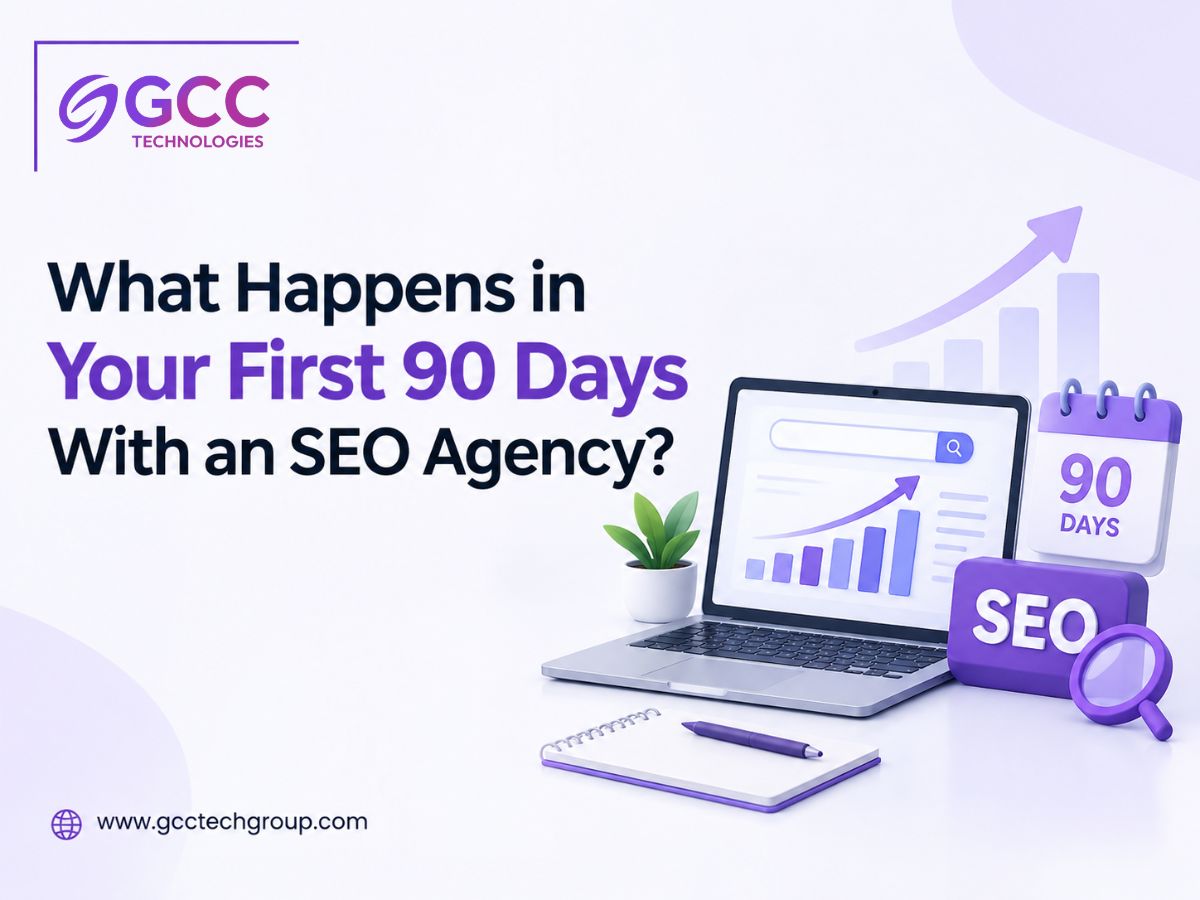
Working with an SEO agency in Dubai for the first 90 days follows three phases: audit and planning in month one, fixes and optimization in month two, and content and authority building in month three. You should see early signs of progress, such as cleaner site health and improving rankings, by day 90. Bigger gains in traffic and leads usually build in months four to six.
That is the short answer. The rest of this guide shows what happens in each phase, what you should receive, and what your team needs to do, so nothing feels like a black box.
Why the First 90 Days Matter So Much
The first three months set the direction for the whole campaign. A strong start means your agency understands your business, your customers, and your competitors before touching a single page.
A weak start usually looks like this:
- Work begins without an audit
- Targets are vague, like “get more traffic”
- Reports show activity but not progress
- No one explains what is happening or why
If you have ever felt confused about what an agency is doing, this is where it starts. A clear SEO agency 90 day plan fixes that by turning a big, vague goal into steps you can track.
What Happens in the First 90 Days With an SEO Agency
Here is the full picture before we go deeper.
| Phase | Timeframe | Main Focus |
| Foundation | Days 1 to 30 | Audit, research, goals, strategy |
| Implementation | Days 31 to 60 | Technical fixes, on-page updates |
| Growth | Days 61 to 90 | Content, link building, reporting |
Think of it like building a house. You do not start with paint. You start with the ground, then the structure, then the finishing touches.
Days 1 to 30: The Foundation Phase
The first month is about learning and planning. Very little will change on your live website yet, and that is normal. Good agencies slow down here so they can speed up later.
Kickoff and Goal Setting
The first step is a conversation. Your agency should ask about your business goals, your ideal customers, your best-selling services, and your past marketing efforts.
Expect questions like:
- Which products or services make you the most profit?
- Who are your main competitors?
- What does a good lead look like for you?
- Have you tried SEO before, and what happened?
This step matters because SEO should support business goals, not just chase rankings. A property company in Dubai needs a different plan from a medical clinic or an online store.
The Technical SEO Audit
Next comes a full technical SEO audit. This is a deep check of how well search engines can find, read, and understand your website.
A solid audit usually reviews:
- Site speed on mobile and desktop
- Mobile friendliness, which matters because most searches in the UAE happen on phones
- Crawl errors and broken pages
- Indexing problems, meaning pages Google cannot see
- Duplicate content and messy URLs
- Site structure and internal linking
- Security and HTTPS setup
- Structured data, the code that helps search engines understand your content
The audit ends with a prioritized list. Some issues are urgent, like a page blocked from Google. Others are small, like a missing image description. A good agency will tell you which is which.
Keyword Research and Search Intent
Now the team moves to keyword research. The goal is to find the exact words your customers type into Google, ChatGPT, and other search tools.
Good research goes beyond search volume. It looks at:
- Search intent, which is what the person actually wants when they type a phrase
- Difficulty, or how hard it is to rank
- Business value, or how likely that search is to become a customer
- Local terms, including Dubai areas, Arabic and English variations, and industry language
For example, someone searching “buy office furniture” wants a product. Someone searching “how to choose office furniture” wants advice. Each needs a different type of page.
Competitor and Gap Analysis
Your agency will also study who ranks above you and why. This shows which keywords your competitors win, what content they publish, and where their backlinks come from. The real value is in the gaps, the topics your competitors ignore that you can own.
Your Written Strategy
By day 30, you should have a documented SEO strategy. It should include:
- Your priority keywords
- A list of technical fixes in order of importance
- A content plan for the next few months
- The metrics you will track
- A clear reporting schedule
Your checkpoint at day 30: You should know exactly what will be done, in what order, and how success will be measured. If you cannot explain the plan to a colleague, ask your agency to simplify it.
Days 31 to 60: The Implementation Phase
This is where you start to see real work happen. The strategy becomes action.
Fixing Technical Issues First
Technical fixes come before content because there is no point publishing great pages on a site Google struggles to read. Common fixes in this phase include:
- Speeding up slow pages
- Repairing broken links and redirects
- Cleaning up sitemaps and robots settings
- Fixing mobile layout problems
- Adding structured data
Some of these need your developer. Agencies that work well with in-house teams save weeks here, so share access and contacts early.
On-Page SEO Optimization
After the technical base is stable, the team starts on-page SEO optimization. This means improving the pages that already exist so they match what people search for.
Typical changes include:
- Title tags and meta descriptions written for both search engines and human clicks
- Headings that organize each page clearly
- Body content improved to answer real questions
- Image names and descriptions so images can appear in search
- Internal links that guide visitors and search engines to important pages
A common surprise for business owners is how much can be improved without building anything new. Many sites already have pages that rank on page two. With better optimization, those pages can move to page one.
Local SEO and Google Business Profile
If you serve customers in a specific area, this phase should also cover local visibility. That means updating your Google Business Profile, keeping your name, address, and phone number consistent across directories, and encouraging genuine customer reviews. For Dubai businesses, this is often one of the fastest ways to show early progress.
Content Planning and Early Publishing
Your agency should start turning the keyword research into a content calendar. Some new pages or blog posts may go live in this phase, especially where competitors have gaps.
Quality matters more than volume. Google’s helpful content system rewards pages written by people with real experience, clear answers, and honest information. Content that feels copied, thin, or written only for search engines tends to fall behind.
Your checkpoint at day 60: Technical fixes should be mostly complete, key pages should be optimized, and you should have a content calendar. Your first progress report should show what changed and why.
Days 61 to 90: The Growth Phase
With the foundation and structure in place, the third month focuses on building authority and visibility.
Publishing Content That Answers Real Questions
Now content production picks up. Strong pages in this phase often include:
- Service pages that clearly explain what you offer
- Blog posts that answer common customer questions
- Comparison and how-to guides
- FAQ sections written in plain language
FAQs matter more than ever. AI tools like ChatGPT, Perplexity, Gemini, and Google AI Overviews pull short, clear answers from web pages. If your content answers a question directly in the first few lines, it has a better chance of being quoted. This is why the strongest pages open with the answer instead of a long introduction. If you want to understand this side of search, our guide on Answer Engine Optimization explains how AI search tools choose what to cite.
Link Building
Link building is the work of earning mentions and links from other trustworthy websites. Google treats these links like votes of confidence. In the first 90 days, this work is usually just getting started, since good links take time to earn.
Healthy link building includes:
- Guest articles on relevant industry sites
- Listings in respected business directories
- Digital PR, such as news mentions and expert quotes
- Partnerships with related businesses
Watch out for shortcuts. Bulk-bought links and networks of low-quality sites can cause penalties that take months to repair. A good agency will happily explain where every link comes from.
Tracking and Adjusting
By this point, you have enough data to see patterns. Your agency should review which pages are gaining impressions, which keywords are moving, and which content needs work. Then they adjust. SEO is not a set-and-forget task. It is a cycle of testing, learning, and improving.
The Day 90 Review
Around day 90, you should sit down for a full review covering:
- What was completed
- What results have appeared so far
- What did not work, and what will change
- The plan for the next three to six months
Your checkpoint at day 90: You should leave that meeting knowing exactly where you stand and what comes next.
How Long Does SEO Take to Show Results?
Most businesses see early movement within three months and clearer business results between months four and six. Highly competitive industries may take longer. Several factors affect the pace:
- Your starting point. A new site needs more time than an established one.
- Competition. Crowded markets like real estate, finance, and healthcare are harder to enter.
- Site health. Sites with major technical problems need more repair work first.
- Content quality and consistency. Regular, useful publishing speeds things up.
- Backlink strength. Stronger authority helps pages rank faster.
Be careful with any agency that promises first-page rankings in a few weeks. Search engines take time to crawl, test, and trust changes. A realistic SEO campaign timeline builds steady growth, while quick tricks tend to collapse later.
What You Should Do During the First 90 Days
The best results come when the agency and the client work as one team. Here is how you can help:
- Give access early. Share your website, analytics, and search console access in week one.
- Respond quickly. Approvals and feedback keep the plan on schedule.
- Share business knowledge. You know your customers better than anyone.
- Be patient with the process. Month one may look quiet, but it is doing important work.
- Ask questions. A good agency welcomes them.
Signs You Have Chosen the Right Partner
Not every agency runs a strong first 90 days. Look for these green flags:
- They start with an audit, not a sales pitch
- They explain their plan in simple words
- They share regular, honest reports
- They do not guarantee specific rankings
- They focus on leads and revenue, not just traffic
At GCC Technologies, we build every campaign around this kind of clarity, because we believe you should always know what is happening with your website and why.
Common Red Flags to Avoid
Be cautious if an agency:
- Refuses to explain their methods
- Promises instant or guaranteed rankings
- Sends reports full of numbers but no meaning
- Uses cheap link schemes
- Does not ask about your business goals
FAQs About SEO Service
1. What happens in the first 90 days with an SEO agency?
The first 90 days usually move through three phases. Month one covers audits, research, and strategy. Month two focuses on technical fixes and on-page improvements. Month three adds content publishing, link building, and a full progress review.
2. What to expect from an SEO agency in the first 90 days?
Expect a technical audit, keyword research, a written strategy, regular reports, and hands-on improvements to your website. You should not expect top rankings yet. Early wins like better site health, improved page speed, and rising impressions are more realistic.
3. What does an SEO agency do in the first three months?
In the first three months, an agency audits your site, researches keywords and competitors, fixes technical problems, optimizes existing pages, publishes new content, and starts building backlinks. They also track progress and adjust the plan based on data.
4. What is a 90 day SEO plan for businesses in Dubai?
A 90 day SEO plan for businesses in Dubai is a structured roadmap that covers the first three months of an SEO campaign. It includes local search needs, such as Google Business Profile updates, bilingual keyword considerations, and mobile performance, along with the usual audit, optimization, and content steps.
5. How long does SEO take to show results?
Most sites see early improvements in three months and stronger results between four and six months. The timeline depends on competition, site condition, and content quality.
6. Can I see results in less than 90 days?
Some quick wins are possible, like fixing broken pages or improving local listings. However, meaningful ranking and traffic growth usually needs more time.
7. Do I need to keep paying for SEO after 90 days?
SEO works best as an ongoing effort. The first 90 days build the base, and later months build on it. Stopping too early often means losing the momentum you worked to create.
Final Thoughts
The first 90 days of SEO are less about instant results and more about building the right foundation. Month one gives you clarity, month two puts fixes in place, and month three starts turning effort into visibility. When you understand each step, you can judge your agency fairly and stay confident in the process.
If you are ready to start with a clear plan and honest reporting, explore our SEO services in Dubai or get in touch for a free website review. Our team at GCC Technologies will walk you through what your first 90 days could look like for your business, step by step.