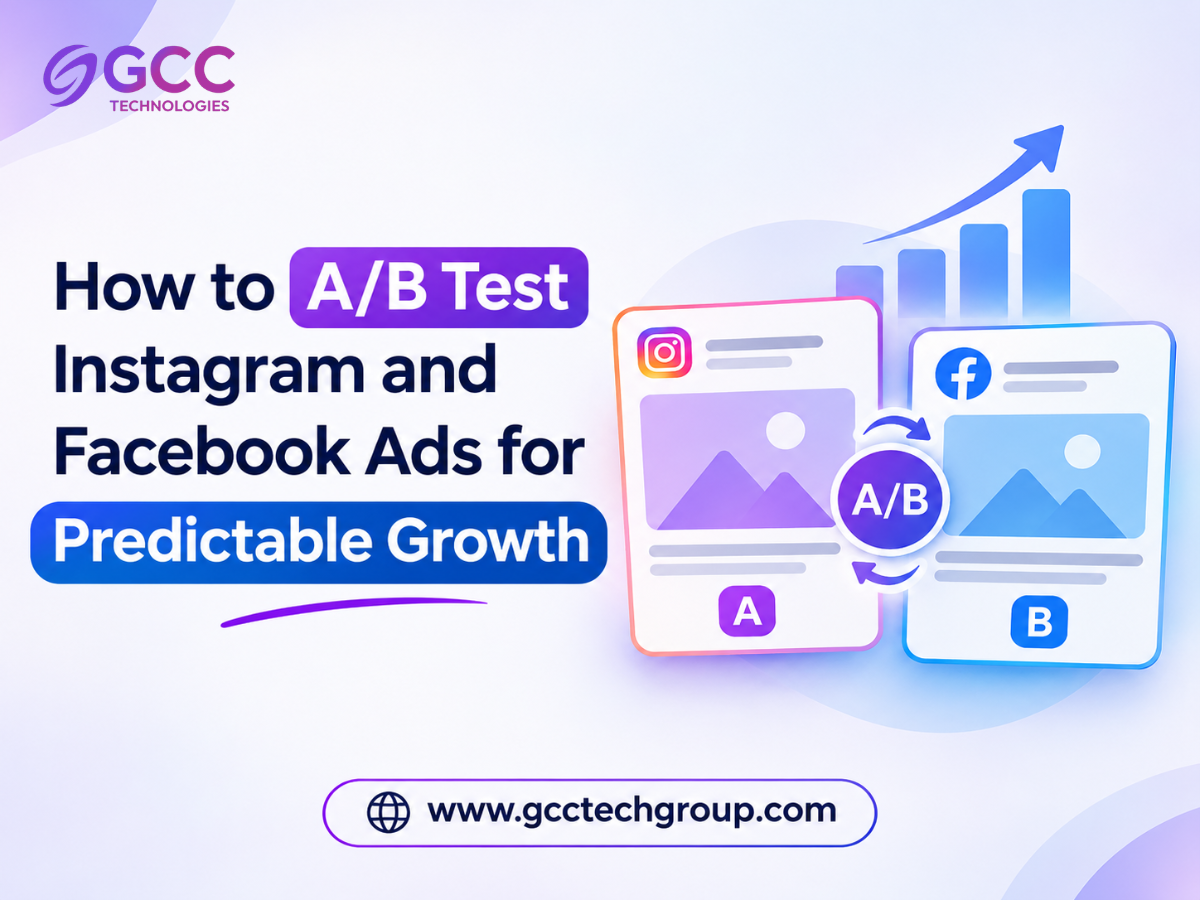
To run Instagram and Facebook ads A/B testing the right way, change one thing at a time, such as the image, the audience or the offer, and show both versions together with the same budget. Pick one result that matches your goal, wait until each version has enough data, and keep the winner. Repeat this loop and your ad results stop being a gamble and become a system you can plan around.
Why testing makes growth predictable
Most advertisers change the image, the audience and the headline all at once, then wonder why results moved. A solid social media advertising strategy works the other way around. It treats every ad as a small question, and every test as the answer.
That habit is the heart of Meta Ads optimization. Instead of trusting opinions, you let real customers vote with their clicks and purchases. Over a few months, you build a record of what your audience responds to, and that record is what makes next quarter easier to forecast.
Here is what steady testing gives you:
- Proof instead of guesses about what your buyers want.
- Less money spent on ads that look good but do not sell.
- A library of winning angles you can reuse in new campaigns.
- A clearer picture of cost and results, which makes budgets easier to plan.
What you can test on Facebook and Instagram
Both platforms run from the same Ads Manager, so the method is the same. What changes is how people behave. Someone scrolling Reels expects fast, visual content, while someone browsing the Facebook feed may read more text before they act. That is why Facebook ads A/B testing and Instagram ads testing should be tracked as separate learnings, even when you run them in one campaign.
You can test almost any part of an ad. These are the most useful variables:
- Creative: image or video, studio look or customer-made style, short or long.
- Copy: the first line, the headline, the length of the primary text.
- Call to action: the button label and the wording near it.
- Audience: broad, interest based, lookalike or past visitors.
- Placement: Feed, Stories, Reels or automatic placements.
- Offer: free trial, free consultation, bundle or limited-time perk.
- Landing page: headline, form length, page speed and proof.
If you are not sure where to begin, start with the offer, then the creative, then the audience. The offer usually changes results the most, and small copy tweaks come last.
A step-by-step way to run your first test
If you have wondered how to A/B test Instagram and Facebook ads effectively, this seven-step routine keeps things simple and fair.
- Pick one goal and one metric. Choose what success means before you launch. For lead generation it may be cost per lead. For a shop it may be cost per purchase. Clicks and likes feel good, but they rarely pay the bills.
- Write a short hypothesis. For example: “A customer video will bring more enquiries than a product photo because it builds trust faster.” A clear guess makes the result easier to understand.
- Change only one variable. If you swap the image and the headline together, you will never know which one did the work.
- Set up both versions fairly. Use the same budget, schedule, audience and optimization goal. Meta’s built-in A/B test tool can split your audience into groups that do not overlap, which keeps the comparison clean.
- Let the test run. Give it at least a full week so it covers weekday and weekend behavior, and avoid editing the ads while it runs. Every edit can restart the learning phase and blur the result.
- Read the result against your chosen metric. Look for a clear, steady gap. A tiny difference with very few conversions is noise, not a winner.
- Record it and repeat. Write down what you tested, what won and what you will test next. Then make the winner your new baseline.
The record in step seven is what separates a team that tests from a team that improves. Without notes, the same mistakes come back every few months.
How to test different ad creatives on Meta Ads
Creative is the part of the ad people notice first, which is why ad creative testing often delivers the biggest gains. If you want to know how to test different ad creatives on Meta Ads, test big ideas first and polish later. Two ads built on different ideas teach you far more than two ads with slightly different colors.
Here are creative tests worth running:
- Format: single image against carousel against short video.
- Hook: the first line or the first two seconds of a video.
- Proof: customer testimonial against product demonstration.
- Message angle: save time, save effort, feel confident or look better.
- Style: raw phone footage against a polished studio shoot.
- Screen shape: vertical for Stories and Reels against square for Feed.
Imagine a dental clinic promoting a teeth whitening offer. Version A shows a smiling patient in a short video. Version B shows a clean before and after photo with a short caption. Everything else stays the same: audience, budget, offer and button. After a week, the clinic compares the cost per booked appointment and keeps the winner.
Creatives also wear out. When the same people see the same ad again and again, results slip. Plan a steady flow of fresh variations so a strong ad never drops without a replacement waiting.
Test who sees your ad, not just what they see
A great ad shown to the wrong people still fails. That is where audience segmentation helps. Instead of one big group, you split buyers into smaller groups and compare how each one responds.
Useful audience tests include:
- Broad targeting against interest-based targeting.
- A lookalike group built from past customers against a cold interest group.
- People who visited your website against people who never heard of you.
- Different locations, age ranges or customer types.
- New customers against returning customers.
Keep one rule in mind: do not let your test groups overlap. If the same person sits in both groups, your two ads compete for the same viewer and the result gets muddy.
Also match the creative to the audience. A message for returning visitors can be short and direct, because they already know you. A message for new viewers needs more context and more trust. Testing the same ad on both groups often shows why one group looks weak when the real problem is a mismatched message.
Turn clicks into customers with offer and page tests
A good ad earns the click. The page, form or shop decides whether that click becomes a customer. This is where conversion rate optimization lifts the results of everything above it.
If you want to know how to improve Meta Ads conversion rates through testing, look at what happens after the click. Try these experiments:
- Match the page headline to the exact promise in the ad.
- Shorten the lead form and see whether more people finish it.
- Test button wording such as “Book a free call” against “Get my quote”.
- Add proof near the button, such as reviews or a short guarantee.
- Speed up the page. Slow pages lose people before they read a word.
Offers deserve the same care. A free consultation, a small bonus or a clear deadline can each pull a different response. Test one offer at a time, and keep the ad itself the same so you can trust the result.
If you sell products, a shorter path to checkout can also help. Our guide on selling directly through Instagram and Facebook Shops explains how in-app shops cut the steps between interest and purchase, which makes a strong place to run landing experience tests.
Which testing method should you use?
Not every test needs the same setup. The table below compares the four common ways to test inside Ads Manager, so you can match the method to the question you are asking.
| Method | Best for | Audience split | Main risk |
| Built-in A/B test | Clean proof on one variable | Even split, no overlap | Needs planning and patience |
| Duplicate ad sets by hand | Quick checks on a small scale | Groups may overlap | Ads can compete for the same viewers |
| Several ads in one ad set | Fast screening of creative ideas | Delivery favors the early leader | One ad may take most of the spend |
| Automatic creative combinations | Finding which assets work together | Handled by the platform | Hard to learn exactly why something won |
The best A/B testing strategies for Facebook and Instagram ads share three habits. They start with a clear question, they use the built-in test when the answer matters, and they save the quick screening methods for early ideas. Use the fast methods to shortlist, then confirm the finalists with a proper split test.
How testing lowers your cost per customer
Your cost per acquisition (CPA) is the money you spend on ads divided by the number of customers or leads you win. It is the number most owners watch, and testing is one of the most reliable ways to bring it down.
Here is how to reduce advertising costs with Facebook and Instagram A/B testing:
- Stop weak ads early. Once a test shows a clear loser, move its budget to the winner.
- Raise the conversion rate. When more clicks turn into customers, each customer costs less.
- Find cheaper audiences. A group that responds well needs less spend to deliver the same results.
- Fix the offer. A stronger offer can make every other part of the ad work harder.
- Catch fatigue sooner. A fresh creative can bring a rising cost back down.
Notice that none of these involve spending more. Testing makes the money you already spend work harder, which is why it comes before any plan to scale.
Common testing mistakes to avoid
Most failed tests fail for the same few reasons:
- Changing several things at once, so the cause stays hidden.
- Stopping after a day because one version looks ahead.
- Spreading a small budget across too many versions, so none gets enough data.
- Choosing winners by clicks or likes instead of leads or sales.
- Editing ads mid-test, which resets delivery and clouds the result.
- Ignoring outside events such as holidays, sales seasons or news that shift behavior.
- Forgetting to write the result down.
A simple monthly testing rhythm
A steady schedule keeps testing from feeling like extra work. Here is one rhythm you can copy:
- Week one: test the offer.
- Week two: test the main creative idea.
- Week three: test the audience.
- Week four: review results, update your notes and plan next month.
Adjust the pace to your budget. A smaller account may run one test a month, and that is fine. The goal is a regular habit, not a perfect calendar.
Where expert help makes testing faster
Testing is simple to explain and hard to keep up. It takes a clean setup, patient reading of results and a steady flow of new ideas. Many busy teams start strong, then stop after a few weeks.
GCC Technologies builds testing into every paid social plan from the first week. That means a clear roadmap of what to test, tidy tracking so results can be trusted, and a written record of every lesson. If paid social is part of your growth plan, our social media marketing services are designed to help your ads improve month after month.
Frequently asked questions
1. What is A/B testing in Facebook and Instagram ads?
It is a method where you run two versions of an ad that differ in one way, such as the image or the audience, at the same time. The platform shows each version to a similar group of people, and you compare which one gives the better result for your goal.
2. How long should I run an A/B test on Meta Ads?
Run it for at least a full week so it covers different days of the week. Extend it if each version has not yet collected enough results to compare. Ending a test early is one of the most common reasons for a wrong conclusion.
3. What should I test first?
Start with the offer, then the main creative idea, then the audience. These usually move results the most. Smaller details such as button color or a single word in the headline are better left for later rounds.
4. Which metric decides the winner?
Use the one that matches your goal. Leads and sales campaigns should be judged by cost per lead or cost per purchase. Awareness campaigns can use reach or cost for each person reached. Avoid choosing a winner by likes alone.
5. Can I test Facebook and Instagram placements separately?
Yes. You can compare placements such as Feed, Stories and Reels, and you can also track each platform as its own learning. People behave differently on each surface, so a winner in one place may not win everywhere.
6. How often should I refresh my ad creatives?
Watch for rising costs and falling engagement, which often signal that people have seen the ad too many times. Keep new versions ready so you can swap them in before results drop too far.
Final thoughts
Predictable growth on social media does not come from a lucky ad. It comes from a repeatable habit: ask one question, test it fairly, learn from the answer and move on. Start with your offer, work through creativity and audience, and keep notes along the way. A few months from now, you will know what your buyers respond to, and your results will be much easier to plan.
Ready to turn your ad spend into a system that keeps improving? Talk to GCC Technologies and let our team build a testing plan around your goals. Contact us today to get started.