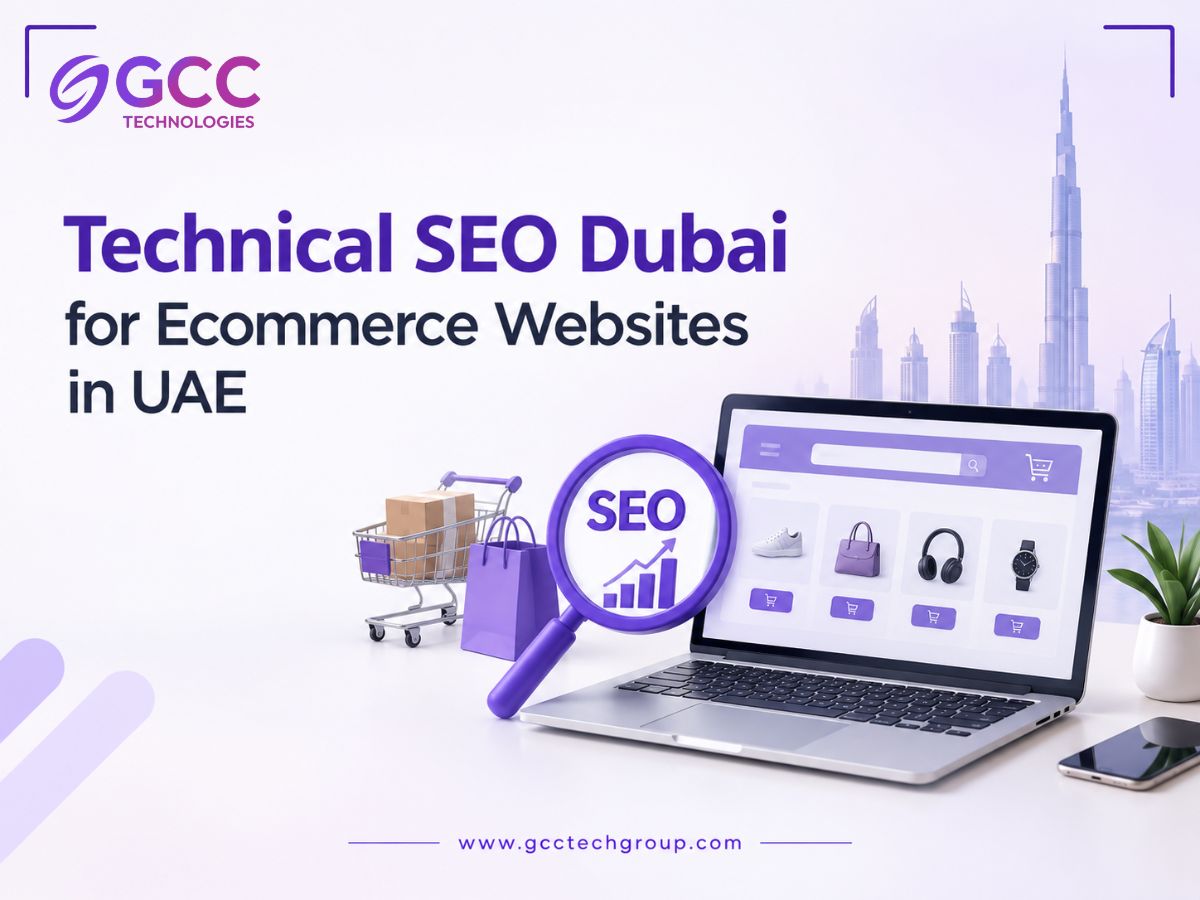
Technical SEO Dubai for ecommerce means fixing the behind-the-scenes parts of your online store, such as site structure, page speed, mobile performance and indexing, so Google and AI search tools can find, understand and rank your products. In the UAE, shoppers browse on their phones, switch between English and Arabic, and compare several stores in minutes, so these fixes often decide who wins the sale. Start with a full audit, repair crawl and speed problems first, then clean up your structure and structured data.
Your products may be great and your photos may be sharp. If search engines cannot crawl your pages cleanly, none of that matters.
What Technical SEO Means for an Online Store
Technical SEO is everything that helps search engines access, read and trust your website. It has nothing to do with the words on your product page. It is about the system that delivers those words.
Think of your store as a busy mall in Dubai. The shops can be beautiful, but if the signs are confusing, the doors are stuck and the escalators are slow, people leave. Search engine bots behave the same way. They have limited time on your site, and every error wastes it.
Ecommerce sites face bigger technical challenges than a simple company website. You may have thousands of product pages, filters that create endless URL versions, out-of-stock items, and seasonal categories that come and go. One small mistake can be copied across thousands of pages.
Why UAE Ecommerce Stores Need a Different Approach
Running a strong ecommerce SEO Dubai plan is not the same as copying a global checklist. The local market brings its own conditions:
- Mobile first behavior: Most UAE shoppers browse and buy from a phone, so your mobile version is the version Google judges first.
- Bilingual audiences: Many stores serve both English and Arabic customers, which adds language and page-version complexity.
- Fierce competition: Local brands, regional giants and international marketplaces all fight for the same searches.
- Fast delivery expectations: Shoppers expect quick pages, quick checkouts and quick delivery. Slow sites lose them early.
- Cross-border reach: Many stores sell across the GCC, which needs careful country and language targeting.
A wider ecommerce SEO UAE strategy has to include content, links and local signals. But technical health is the foundation. Without it, every other effort works against a weak base.
The Technical Areas That Matter Most
Here is where most online stores win or lose rankings. Each area is explained in simple terms, with what to check.
1. Crawlability and Indexing
Search engines must be able to reach your important pages and skip the unimportant ones. Check these points:
- Your robots.txt file should not block product, category or image folders by mistake.
- Your XML sitemap should list only live, indexable pages that return a normal status.
- Pages with thin or duplicate content should use a no index tag when they add no value.
- Broken pages should redirect properly, and redirect chains should be shortened.
Many stores discover that a large share of their pages are not indexed at all. Google Search Console’s page indexing report shows exactly why.
2. Ecommerce Site Structure
A clear ecommerce site structure helps both shoppers and search engines understand which pages matter most. Keep it shallow and logical.
- Aim for any product to be reachable within three or four clicks from the homepage.
- Group products into clear categories and subcategories.
- Use breadcrumbs so users and bots can see where a page sits.
- Keep URLs short, readable and consistent.
A good structure also spreads link strength to your money pages. Your best categories should get prominent internal links, not be buried five levels deep.
3. Faceted Navigation and Duplicate Content
Filters such as size, color, brand and price are helpful to shoppers. To search engines, they can create thousands of near-identical URLs. This wastes crawl time and dilutes rankings.
To keep things under control:
- Use canonical tags to point filtered pages to the main category page.
- Block low-value filter combinations from crawling.
- Allow indexing only for filter pages that match real search demand, such as “black leather sofa”.
- Handle product variants carefully so one product does not appear as five competing pages.
4. Page Speed and Core Web Vitals
Speed is one of the clearest signals of a good shopping experience. Core Web Vitals optimization focuses on three measurements Google uses:
- Largest Contentful Paint (LCP): how fast the main content loads. Aim for under 2.5 seconds.
- Interaction to Next Paint (INP): how quickly the page responds to taps and clicks. Aim for under 200 milliseconds.
- Cumulative Layout Shift (CLS): how stable the layout stays while loading. Aim for under 0.1.
Common fixes include compressing images, using modern formats like WebP, removing unused apps and scripts, enabling caching, and serving files from a content delivery network with a server close to your GCC audience.
5. Mobile Experience
Because most of your traffic arrives on phones, mobile SEO for ecommerce deserves its own attention. Check that:
- Buttons are large enough to tap without zooming.
- Text is readable without pinching.
- Pop-ups do not cover the product or block the checkout.
- Product images load quickly on mobile networks.
- The mobile page carries the same content, links and structured data as the desktop page.
Open your own store on a mid-range phone with an average connection. If it feels slow to you, it feels slow to your customers.
6. Structured Data
Structured data, also called schema markup, tells search engines exactly what is on a page. For online stores, the most useful types are:
- Product schema, with name, image, availability and reviews.
- Breadcrumb schema for navigation paths.
- Organization schema for your business details.
- FAQ schema on pages that answer real customer questions.
This markup can unlock rich results in Google, such as star ratings and stock status. It also helps AI tools understand your products and describe them accurately.
7. Language and Country Targeting
If your store serves English and Arabic visitors, use hreflang tags so Google shows the right version to the right person. Each language page should point to its alternatives and to itself. Mistakes here can cause the wrong language to rank, or cause both versions to compete with each other.
8. Security and Trust
Your entire store should run on HTTPS. Mixed content warnings, expired certificates and unsafe checkout pages hurt trust and can hurt rankings. Since shoppers enter payment details on your site, this is not optional.
How to Improve Technical SEO for Ecommerce Websites in Dubai
If you want to know how to improve technical SEO for ecommerce websites in Dubai, follow this order. It puts the biggest wins first.
- Run a crawl of your full site. Use a crawler and Google Search Console to list errors, redirects, duplicate titles and blocked pages.
- Fix indexing problems. Make sure your key categories and best-selling products are indexable and included in your sitemap.
- Repair speed on your top templates. Improve the homepage, category page and product page templates first, since each fix applies to thousands of URLs.
- Simplify your structure. Merge weak categories, shorten click paths and strengthen internal links to priority pages.
- Add or correct structured data. Test with Google’s Rich Results Test before and after.
- Set up monitoring. Track Core Web Vitals, index coverage and crawl errors every month so problems are caught early.
Small, steady fixes beat one giant overhaul that nobody maintains.
What a Proper Website Technical Audit Includes
A website technical audit should give you a clear, ranked list of problems, not a confusing report full of warnings. A useful audit covers:
- Crawl and index status for all page types
- Status codes, redirects and broken links
- Duplicate and thin content
- Title tags, headings and canonical tags
- Page speed and Core Web Vitals results
- Mobile usability checks
- Structured data validation
- JavaScript rendering issues
- Sitemap and robots.txt review
- Hreflang and international setup
For a store in this region, the most useful version is a technical SEO audit for ecommerce websites in UAE, because it also checks bilingual setup, regional hosting speed and marketplace competition. The best audits explain each issue in plain language, tell you why it matters, and rank fixes by business impact.
Common Mistakes UAE Store Owners Make
Watch for these. They are more common than you would expect:
- Ignoring out-of-stock pages. Deleting them without redirects creates broken links and lost rankings. Keep them live with clear messaging, or redirect to a close alternative.
- Letting filters run wild. Endless URL versions burn your crawl budget.
- Heavy themes and too many plugins. Every extra script slows the page.
- Copying manufacturer descriptions. Duplicate product text gives search engines no reason to prefer your page.
- Forgetting Arabic pages. Translated pages left with English titles or wrong tags confuse search engines.
- Skipping post-launch checks. Redesigns and migrations often break redirects, tags and speed overnight.
The Best Technical SEO Strategy for Ecommerce Websites in Dubai
The best technical SEO strategy for ecommerce websites in Dubai is a phased plan tied to revenue, not a one-time checklist. Here is a simple way to organize it.
Phase 1: Foundation (first month)
Complete the audit, fix critical indexing and crawl errors, and secure the site properly.
Phase 2: Performance (second month)
Improve speed and Core Web Vitals on main templates, and polish the mobile experience.
Phase 3: Structure and signals (third month)
Refine categories, internal links, structured data and language targeting.
Phase 4: Ongoing growth
Monitor monthly, test new templates before launch, and update your setup as Google and AI search evolve.
Notice that the plan follows business value. Pages that already drive sales get fixed first, because improving them pays off fastest.
Getting Found in AI Search Too
Search is no longer only ten blue links. AI Overviews, ChatGPT, Perplexity and Gemini now pull answers from websites they can read and trust. A technically clean store makes that easier. Fast pages, clear structure, accurate schema and helpful content all raise your chances of being cited.
If you want to go deeper, our guide on answer engine optimization explains how to shape your content so AI tools quote it. Technical health and AEO work together: one makes your site readable, the other makes your answers worth quoting.
Working With a Technical SEO Partner
Not every team has an in-house developer who understands crawling, rendering and schema. That is where specialist help pays off. When choosing technical SEO services Dubai businesses can rely on, look for a partner who:
- Explains problems in plain language
- Prioritizes fixes by sales impact
- Understands bilingual and GCC market needs
- Works with your developers instead of handing over a report and disappearing
- Shares clear monthly progress you can actually read
At GCC Technologies, our team handles the audit, the fixes and the follow-up, so store owners can focus on products and customers. For stores selling across borders, technical SEO services for ecommerce websites in UAE should always include hreflang, mobile checks and speed work tuned for regional traffic.
FAQs About Technical SEO
1. What is technical SEO for ecommerce websites?
Technical SEO for ecommerce websites is the process of optimizing how a store is built and delivered so search engines can crawl, index and rank it. It covers site structure, page speed, mobile usability, structured data, canonical tags and secure browsing.
2. Why is technical SEO important for online stores in Dubai?
Dubai shoppers are mostly mobile, expect fast pages and often use both English and Arabic. A technically weak store loads slowly, gets crawled poorly and loses ground to competitors. Fixing the technical base helps every other SEO effort work better.
3. How long does technical SEO take to show results?
Some fixes, such as removing crawl blocks, can show improvement within a few weeks. Larger changes, such as structure updates and speed work, usually take a few months to show in rankings and traffic. Results depend on your site size and how many issues exist.
4. What is the difference between technical SEO and on-page SEO?
On-page SEO focuses on visible content, such as titles, headings, product descriptions and images. Technical SEO focuses on how the site works underneath, including speed, crawlability, indexing and code. Both are needed for strong rankings.
5. How often should an ecommerce site have a technical audit?
Run a full audit at least twice a year, and again after any redesign, migration or platform change. Monthly checks in Google Search Console help catch new errors between audits.
6. Do Core Web Vitals affect ecommerce rankings?
Yes. Core Web Vitals are part of Google’s page experience signals. They will not outweigh great content alone, but they can separate two similar pages, and they strongly affect whether shoppers stay and buy.
7. Do I need separate SEO for Arabic and English pages?
Each language version should be treated as its own page with translated titles, descriptions and content, plus correct hreflang tags. This helps Google show the right version to the right visitor.
8. Can technical SEO help my store appear in AI answers?
Yes. AI tools favor sites that are easy to read, well structured and clearly marked up. Clean code, accurate schema and direct answers make your pages easier to understand and cite.
Conclusion
A store that loads fast, crawls cleanly and follows a clear structure is easier for customers to use and easier for search engines to reward. Start with an audit, fix the biggest blockers, then build a steady monthly routine. Stores that treat technical health as an ongoing habit tend to pull ahead of those that fix it once and forget it.
Ready to find out what is holding your store back? Talk to the team at GCC Technologies for a technical review of your ecommerce website, and get a clear, prioritized plan you can act on right away.