Attracting new customers is important for every business, but what happens after someone enquires? Do they receive a timely response, get the right solution, and have a reason to return? For many businesses in the UAE, the challenge is not simply generating leads. It is turning those leads into satisfied customers and building relationships that support long-term growth.
With increasing competition across industries, businesses cannot depend entirely on advertising campaigns or one-time sales. They need a customer-centred marketing strategy that connects every stage of the customer journey, from the first interaction to repeat purchases and recommendations.
This requires more than effective marketing. It involves understanding customer expectations, aligning sales and operations, delivering consistent experiences, and building trust. For UAE businesses looking to grow sustainably, putting customers at the centre of business decisions can create a stronger foundation for long-term success.
What Is a Customer-Centred Marketing Strategy?
A customer-centred marketing strategy focuses on understanding customers’ needs, preferences, expectations, and challenges before deciding how to communicate with them or deliver products and services.
Instead of concentrating only on sales targets, businesses consider the complete customer experience. This includes how people discover a brand, evaluate its offerings, interact with its team, make purchasing decisions, and receive support afterwards.
For example, a Dubai-based professional services company might attract enquiries through Google Ads and organic search. However, if potential customers receive delayed responses or unclear proposals, the business may lose opportunities despite having a strong marketing campaign.
A customer-centred approach connects marketing, sales and customer service to create a consistent experience.
Its main principles include:
- Understanding customers: Identifying their expectations, purchasing behaviour and pain points.
- Personalised communication: Providing relevant information based on customer needs.
- Consistent service: Maintaining quality across digital and offline interactions.
- Building trust: Communicating honestly and delivering on promises.
- Long-term relationships: Supporting customers even after the initial transaction.
The objective is not simply to acquire more customers but to give them compelling reasons to stay.
Why UAE Businesses Need to Focus on Customer-Centred Growth
The UAE offers significant opportunities for businesses, supported by its diverse population, digital infrastructure, and competitive commercial environment. However, customers also have access to numerous brands and alternatives.
A business that fails to deliver a positive experience can quickly lose a potential customer to a competitor.
According to PwC’s 2024 Voice of the Consumer Survey, 73% of consumers say customer experience is an important factor in purchasing decisions. This highlights why the overall experience matters alongside product quality and pricing.
For businesses operating in Dubai, Abu Dhabi, Sharjah and other Emirates, customer expectations can also differ depending on industry, language, location and purchasing behaviour.
A well-planned customer experience strategy helps businesses respond to these differences.
1. Customers Expect Convenient Digital Experiences
Customers increasingly use search engines, websites, social media and messaging platforms to research businesses before contacting them.
A confusing website, slow response, or complicated enquiry process can discourage potential customers.
Businesses should make it easy for visitors to find relevant information, understand available services, and contact the right team.
2. Competition Makes Customer Loyalty Valuable
When customers have several alternatives, businesses must offer more than competitive pricing.
Reliable communication, transparent processes, personalised assistance, and consistent service can help create stronger relationships.
Building a Customer-Centred Growth Strategy: Five Important Steps
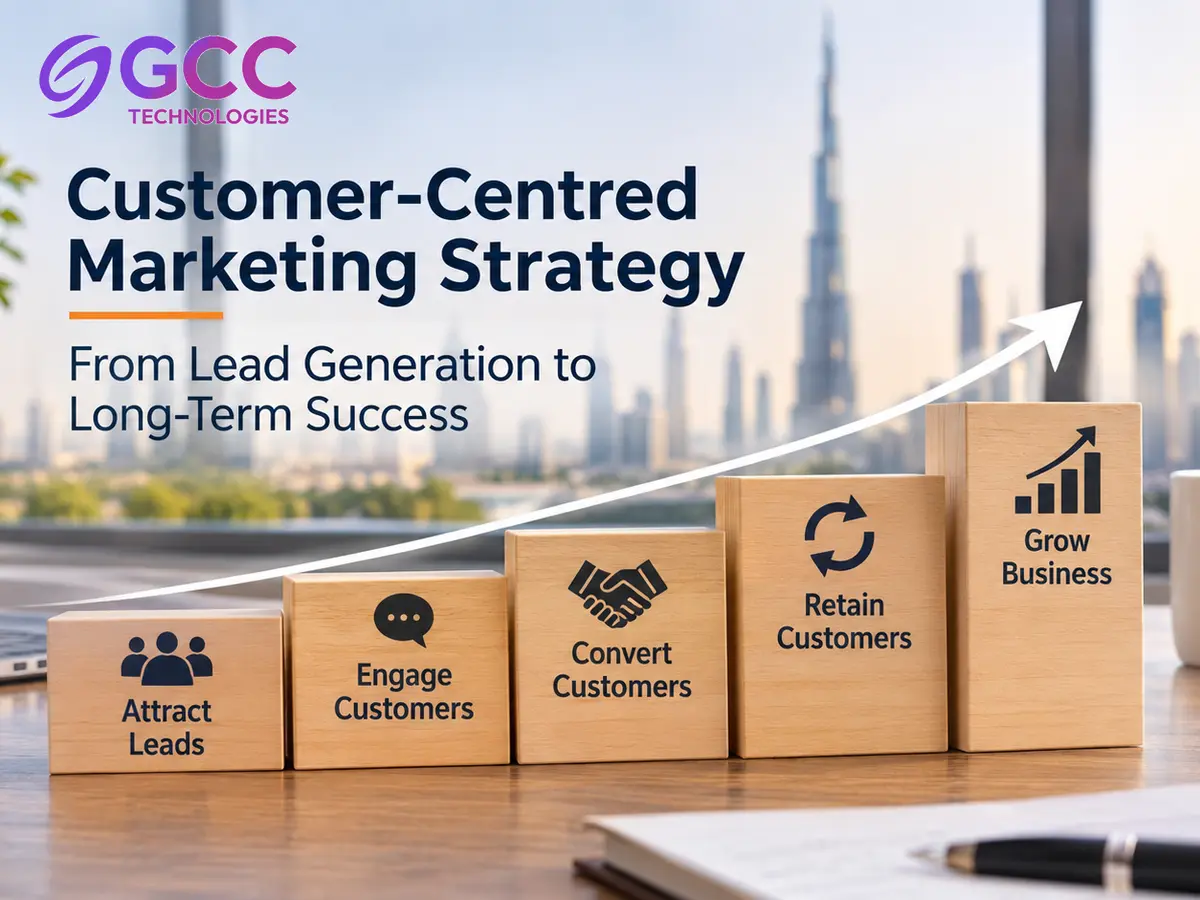
A successful strategy connects customer acquisition, engagement, sales, and retention rather than treating them as separate activities.
1. Understand Your Target Audience Before Generating Leads
Effective lead generation begins with understanding who the business wants to reach.
UAE businesses often serve customers from different professional, cultural, and geographical backgrounds. A single marketing message may not appeal equally to every audience.
Start by developing customer profiles based on:
- Industry, location, and business size.
- Customer needs and purchasing challenges.
- Budget and decision-making authority.
- Preferred communication channels.
- Expectations from a product or service.
For example, a B2B technology company targeting small businesses may focus on affordability and implementation support. A company targeting large enterprises may prioritise scalability, security and long-term service reliability.
These differences should influence advertising messages, website content and sales conversations.
2. Develop Effective Lead Generation Strategies in the UAE
Once the target audience is clear, businesses can select channels that attract relevant prospects.
Strong lead generation strategies in UAE markets should combine visibility, useful content, and clear conversion opportunities.
Search Engine Optimisation
SEO helps businesses appear when potential customers search for relevant products or services.
By targeting location-specific and service-related keywords, companies can attract people who are already looking for solutions.
Explore GCC Technologies’ digital marketing services to understand how organic visibility can support business growth.
Paid Advertising
Google Ads and social media advertising can help businesses reach specific audiences based on their interests, search behaviour, and other targeting criteria.
However, campaign success should not be measured only by clicks or impressions. Businesses should also evaluate enquiry quality, conversion rates and customer acquisition costs.
Content Marketing
Informative blogs, industry insights, case studies and service guides help potential customers understand a business before contacting its team.
Useful content can answer common questions, address purchasing concerns and establish credibility.
The objective is to attract the right audience rather than simply increase website traffic.
3. Connect Marketing and Sales Through Customer Relationship Management
Generating enquiries is only one part of the process. Businesses also need a reliable system to manage those enquiries and maintain communication.
This is where customer relationship management (CRM) becomes valuable.
A CRM system helps businesses organise customer information, record interactions, track sales opportunities and manage follow-ups.
For example, when a potential customer submits an enquiry through a website, the sales team can record the details, assign responsibility and schedule a follow-up.
An effective CRM process should include:
- Centralised customer and enquiry records.
- Lead assignment and follow-up reminders.
- Tracking of sales pipeline stages.
- Records of previous conversations.
- Customer feedback and service history.
How CRM Improves the Customer Journey
When marketing and sales teams have access to relevant customer information, they can provide more consistent communication.
A sales representative does not need to ask customers to repeat information they have already submitted. Instead, the conversation can continue based on their actual requirements.
This improves efficiency and creates a more organised customer experience.
4. Improve Customer Experience at Every Touchpoint
A customer experience strategy should cover every interaction a person has with a business.
This includes the website, advertisements, enquiry forms, sales calls, meetings, payment processes, and after-sales support.
Even small improvements can make the journey easier.
Consider a UAE-based service provider receiving enquiries through its website and WhatsApp. If customers receive inconsistent information from different representatives, their confidence may decline.
The business can address this by establishing clear communication guidelines, standardising service information, and training employees to respond effectively.
Important areas to improve include:
- Website usability: Make navigation simple and provide clear service information.
- Response time: Acknowledge enquiries promptly and communicate realistic timelines.
- Transparency: Explain pricing, deliverables, and service conditions clearly.
- Personalisation: Recommend solutions based on individual requirements.
- After-sales support: Remain available when customers need assistance.
A positive experience should not depend on which employee or communication channel a customer uses.
5. Turn Existing Customers into Long-Term Relationships
Customer retention begins after the sale, not when a customer is ready to purchase again.
Businesses should maintain communication, understand changing requirements, and provide support throughout the relationship.
Some practical retention activities include:
- Following up after service delivery.
- Collecting customer feedback.
- Sharing relevant updates and useful resources.
- Offering loyalty benefits where appropriate.
- Identifying opportunities to improve existing services.
- Addressing complaints before they damage customer relationships.
For example, a digital marketing agency can schedule regular performance reviews with clients, explain campaign results, and discuss future opportunities.
This approach demonstrates accountability and helps clients understand the value of ongoing collaboration.
The Role of Leadership in Creating a Customer-First Business Culture
A customer-centred strategy cannot succeed through marketing activities alone. It requires leadership commitment and coordination across the organisation.
This perspective is particularly relevant to Venktesh Pandit, Founder and Managing Director of GCC Technologies LLC and GCC Drive, and Director at Namastetu Technologies Pvt. Ltd.
With more than 20 years of experience in operations, sales, and business development, his professional approach reflects an important business principle: every successful relationship starts with understanding people.
His perspective highlights why businesses should look beyond individual transactions and consider the complete customer relationship.
Connecting Business Operations with Customer Expectations
Marketing may create interest, but operations and service delivery determine whether a business fulfils its promises.
For example, an advertising campaign might generate enquiries for a service provider, but inconsistent delivery, unclear communication or delayed support can undermine the entire customer experience.
Leaders must therefore ensure that marketing promises align with operational capabilities.
This means creating clear processes, supporting employees, monitoring service quality, and encouraging teams to take responsibility for customer satisfaction.
Building Trust Through Long-Term Relationships
Trust is developed through consistent actions rather than promotional messages alone.
Businesses build stronger relationships when they listen to customers, communicate transparently, and respond responsibly when challenges arise.
This long-term perspective is central to sustainable business development. It also provides an opportunity for GCC Technologies to bring together its understanding of digital growth, customer engagement, and business requirements.
The wider vision is simple: technology and marketing should support meaningful business relationships, not replace the human understanding behind them.
How to Measure the Success of a Customer-Centred Strategy
A strategy needs measurable outcomes to understand whether it is delivering value.
Instead of focusing only on website traffic or lead volume, businesses should track metrics across the entire customer lifecycle.
| Key metric | What it measures |
| Customer Acquisition Cost (CAC) | Average cost of acquiring a new customer |
| Conversion Rate | Percentage of leads completing a desired action |
| Customer Retention Rate | Percentage of customers retained over a period |
| Customer Lifetime Value (CLV) | Estimated revenue generated throughout a customer relationship |
| Customer Satisfaction Score (CSAT) | Customer satisfaction with a product or interaction |
| Net Promoter Score (NPS) | Customer willingness to recommend a business |
These metrics help decision-makers identify where improvements are needed.
For example, if a business receives many enquiries but converts very few into customers, it may need to improve lead qualification, sales communication or service positioning.
If acquisition is strong but retention is weak, the business should investigate service quality, customer support and post-purchase engagement.
The key is to use performance data to make better business decisions rather than treating reporting as a routine administrative task.
Conclusion: Put Customers at the Centre of Business Growth
Sustainable business growth is not achieved by generating more leads alone. It comes from understanding customers, delivering consistent experiences and building relationships that continue beyond the first transaction.
For UAE businesses, a customer-centred marketing strategy creates a stronger connection between marketing performance, operational efficiency and customer satisfaction.
As reflected in Venktesh Pandit’s leadership perspective, understanding people and building long-term relationships should remain central to business decisions. When companies align their marketing activities with genuine customer needs, they create better opportunities for trust, loyalty, and sustainable growth.
Looking to build a stronger digital presence and attract the right customers?
Connect with GCC Technologies LLC to explore digital marketing and web solutions that support your business growth.
Frequently Asked Questions
1. What is a customer-centred marketing strategy?
A customer-centred marketing strategy focuses on understanding customer needs and creating relevant experiences throughout the buying journey. It connects marketing, sales, and customer service to improve satisfaction, conversions, and long-term loyalty.
2. Why is customer retention important for UAE businesses?
Customer retention helps businesses maintain valuable relationships, encourage repeat purchases, and reduce dependence on continuous customer acquisition. It can also strengthen brand reputation through positive recommendations.
3. How can businesses improve lead generation in the UAE?
Businesses can improve lead generation through local SEO, Google Ads, social media marketing, informative content, and optimised landing pages. They should also focus on targeting relevant audiences and measuring lead quality.
4. How does CRM support customer acquisition and retention strategies?
CRM systems organise customer information, track enquiries, manage follow-ups, and maintain interaction histories. This helps marketing and sales teams communicate consistently and identify opportunities to strengthen customer relationships.
5. What is the difference between customer acquisition and customer retention?
Customer acquisition focuses on attracting and converting new customers, while customer retention focuses on maintaining existing relationships and encouraging repeat business. Both are essential for sustainable growth.